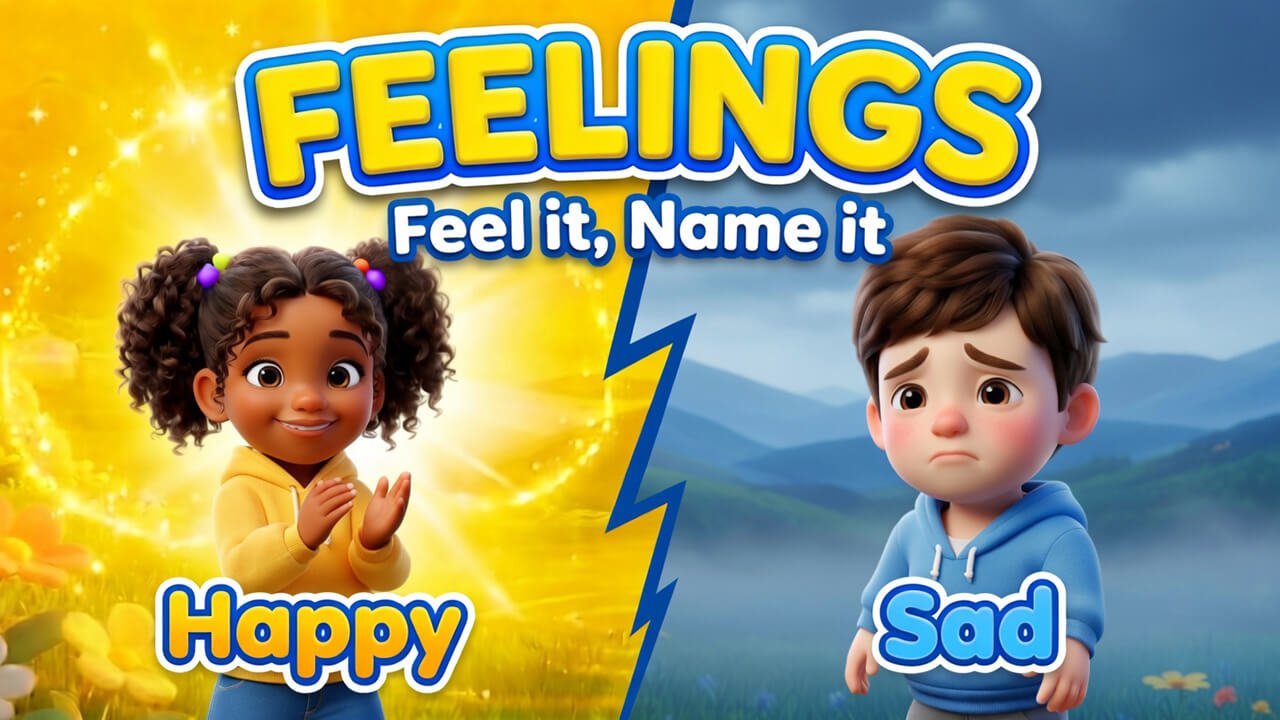
Help children recognise and name everyday emotions through a gentle, interactive song. Children explore feelings such as anger, sadness, fear, happiness, excitement and tiredness, using actions including stomping, hugging, holding hands, clapping, jumping and resting. Follow up with a feelings check-in or printable activity to support emotional vocabulary, self-expression and early self-regulation skills.
Invite children to join the group and explain that everyone experiences different feelings. Introduce a few familiar words, such as happy, sad, angry and scared. Let children know they can join in, watch quietly or use gestures rather than speak.
Step 2:
Sing it and act it out
4 minutes
Play the Feel It, Name It video. Invite children to follow the actions: stomp for angry, hug themselves for sad, hold a hand for scared, clap for happy, jump for excited and rest for tired. Explain that these are ways to act out feelings in the song, not rules about how every person must behave. Children can choose smaller movements or simply watch.
Step 3:
Explore feelings together
3 minutes
Talk about a few feelings from the song using emotion faces, a mirror or simple gestures. Ask children what a face or body might look like when someone feels happy, sad, angry or tired. Reinforce that the same situation can make different people feel different ways. Offer reassurance and avoid asking children to disclose personal experiences.
Step 4:
Choose a feelings activity
4 minutes
Choose one activity from the printable pack. Children might circle the face that matches how they feel today, match feeling words to faces or actions, trace an emotion's initial letter, find hidden hearts or follow the path from the storm cloud to the calm sun. Let children choose their own answer in the daily check-in, and provide adult support where needed.
Step 5:
Settle and recap
2 minutes
Finish with the song's gentle closing idea: slow down, rest the body and settle. Invite children to take a comfortable breath or sit quietly if they wish. Ask them to name one feeling or one thing that can help someone feel supported, such as a hug when welcome, holding a trusted adult's hand or having a quiet rest.
Questions to ask
Can you name a feeling from the song?
What action did the song use for happy, angry or excited?
Can two people feel differently about the same thing?
What could you do if you or a friend felt sad or scared?
What helps your body feel calm when you need a rest?
How are you feeling today, if you would like to share?
Finish together
Children have explored emotional vocabulary and ways to express feelings through music, movement and discussion. They have also considered simple ways to seek comfort or settle their bodies. Reinforce that every feeling is acceptable, children may express emotions differently, and a trusted adult can help when feelings are difficult.
Free printable activity pack
Continue the lesson with the matching activity sheets.